Urinary tract infection (UTI) is one of the most common infections women encounter over a lifetime. A significant proportion of women experience it at least once in their life; in some, the infection comes back again and again. Infections recurring above a certain number per year are defined as "recurrent UTI" and require a separate approach.
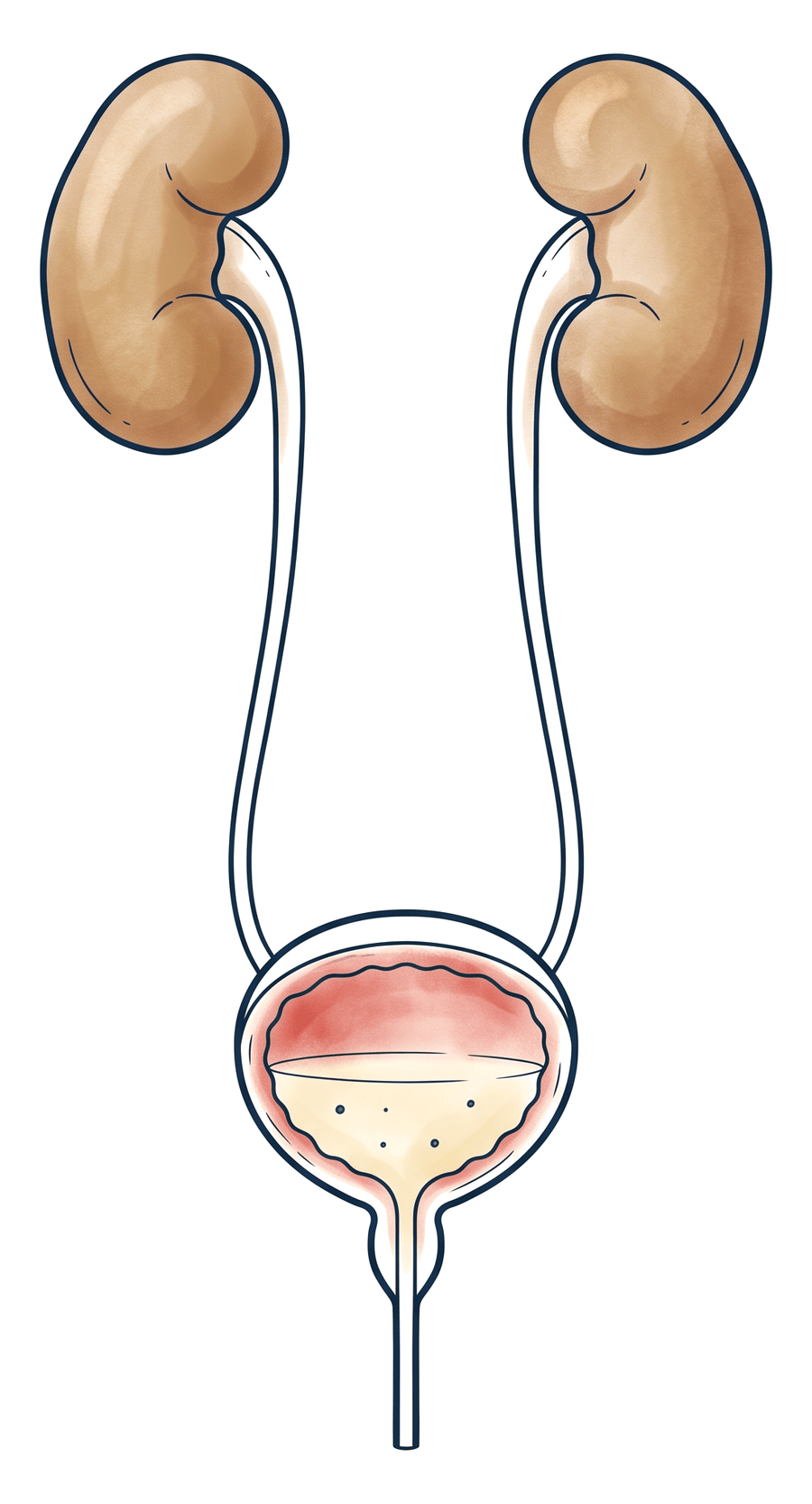
Why is it more common in women?
In women, the short length of the urinary channel (urethra) and its position close to the anus make it easier for bacteria to reach the bladder. Because of this anatomical feature, UTI is far more common in women than in men.
Factors that make recurrence easier
- Sexual intercourse
- Decreased estrogen and tissue thinning after menopause
- Insufficient fluid intake and holding urine for a long time
- Diabetes
- Incomplete bladder emptying and underlying conditions such as stones
In frequently recurring infections, the aim is not only to treat the current attack; it is to find and remove the cause that will prevent recurrences.
Diagnosis and assessment
Diagnosis is made with a urine test and, when needed, a urine culture. In recurrent situations, ultrasound and further assessment can be done to see whether there is an underlying cause. Taking a culture at each attack is important for the correct antibiotic choice and for monitoring resistance.
Prevention: reducing recurrences
- Plenty of fluids: Adequate water throughout the day flushes the urinary tract.
- Not holding urine: Urinating especially after sexual intercourse.
- After menopause: In suitable women, regional estrogen support can reduce recurrences.
- Preventive approaches: In selected patients, preventive treatment strategies can be applied on a physician's advice.
Avoiding unnecessary and haphazard antibiotic use is critical for preventing the development of resistance.
When is a urologist's assessment needed?
A urological assessment is definitely needed for infections that recur several times a year, do not go away despite treatment, or run with fever/back pain or blood in the urine. The aim is to detect an overlooked cause (a stone, incomplete emptying, an anatomical problem).