Anatomy
The male urogenital system
Sexual function depends on the harmony of blood vessels, nerves, hormones and psychological state. Correctly finding the source of the problem is the first step of treatment.
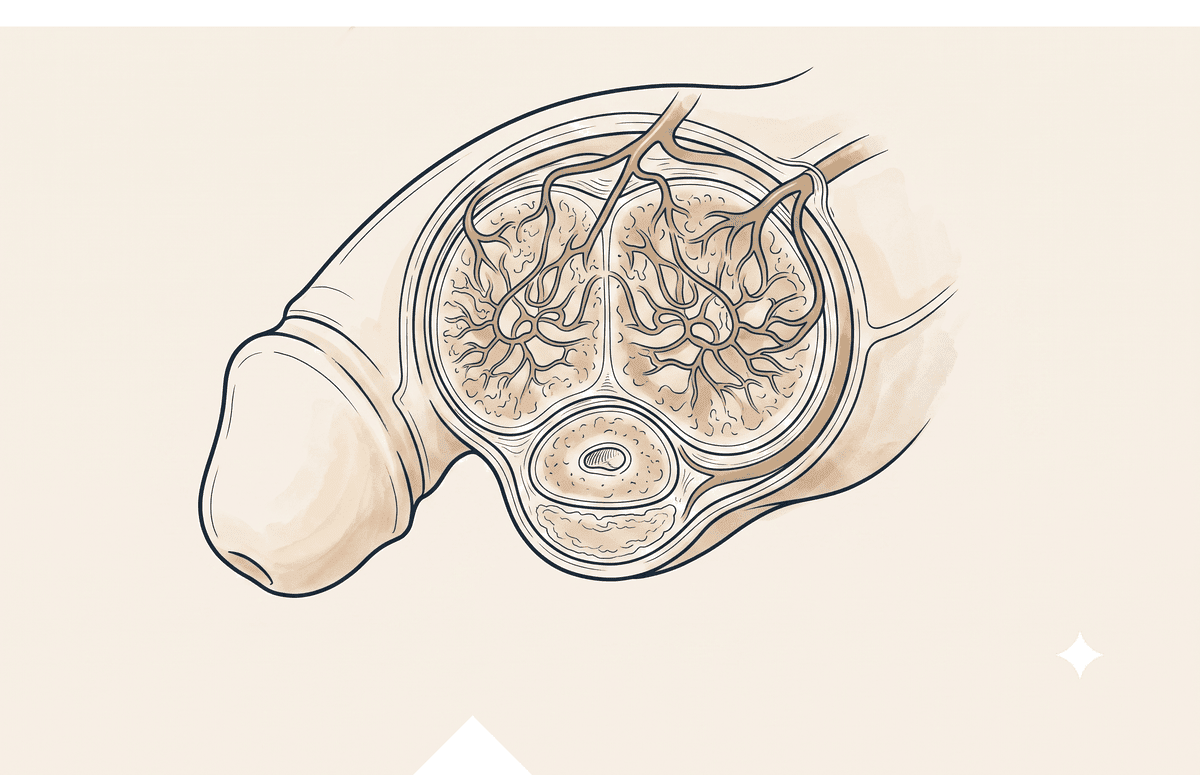
Erectile problems, penile curvature and sexual dysfunctions are often treatable. These hard-to-discuss topics are resolved with the right information.
Erectile dysfunction is the inability to achieve or maintain an erection firm enough for sexual intercourse. Occasional difficulties are normal; but when the problem becomes persistent, it calls for a medical assessment.
An erection is a complex process in which blood vessels, nerves, hormones and psychological state all work together. For this reason, erectile dysfunction can often be the first sign of an underlying health problem — especially cardiovascular disease, diabetes and high blood pressure. In that sense it is also seen as an "early warning."
The good news is this: when the cause is correctly identified, erectile dysfunction has very effective treatments. There is a broad range of options, from medication to regenerative methods (ESWT, PRP), and, when needed, a penile prosthesis.
Sexual function depends on the harmony of blood vessels, nerves, hormones and psychological state. Correctly finding the source of the problem is the first step of treatment.
There is usually more than one cause behind an erectile problem. The right treatment starts with finding the right cause.
The most common cause. Insufficient blood flow to the penis; linked to cardiovascular disease, blood pressure and cholesterol.
By affecting vessels and nerves, diabetes is one of the most important causes of erectile dysfunction.
Low testosterone can reduce sexual desire and function; it is assessed with a simple blood test.
Some operations, spinal problems or neurological diseases can affect nerve conduction.
Stress, anxiety, relationship problems and performance pressure; especially prominent in younger men.
Smoking, excessive alcohol, inactivity and certain medications negatively affect sexual function.
Assessment begins with a comfortable, private conversation. The aim is to reveal the true cause of the problem.
The complaint is assessed with questionnaires such as the IIEF; general health and medications are reviewed.
Underlying causes are investigated with values such as testosterone, glucose and cholesterol.
When needed, blood flow to the penis is assessed by ultrasound; a vascular cause becomes clear.
Based on the findings, the most suitable treatment — medication, ESWT/PRP or a prosthesis — is decided together.
It is nothing to be ashamed of — we answer the most common questions openly.
Although it becomes more common with age, erectile dysfunction is not "inevitable" or something "to be accepted." It can be treated at any age. It should also be taken seriously because it can be a herald of underlying cardiovascular disease.
Yes. The distinction can largely be made with history, examination and, when needed, tests. For example, the presence of morning erections and a sudden onset may point to a psychological cause, while gradually worsening problems are often vascular.
There definitely is. In patients who do not respond to medication, regenerative methods such as ESWT and PRP, and when needed penile prosthesis surgery, give very effective results. Medication is only one of the options.
Yes. Depending on the stage of the disease there are medication, ESWT, injection treatments or surgical options. The painful early phase and the stable late phase require different approaches; this is why assessment is important.
Absolutely. Sexual health matters fall under medical confidentiality. You will be assessed in an environment where you can speak comfortably and will not be judged.
Sexual health problems are solved when they are talked about. Let's identify the cause together and plan the most suitable treatment for you. You can reach out confidentially via WhatsApp for a preliminary consultation.