Anatomy
The bladder's place in the urinary system
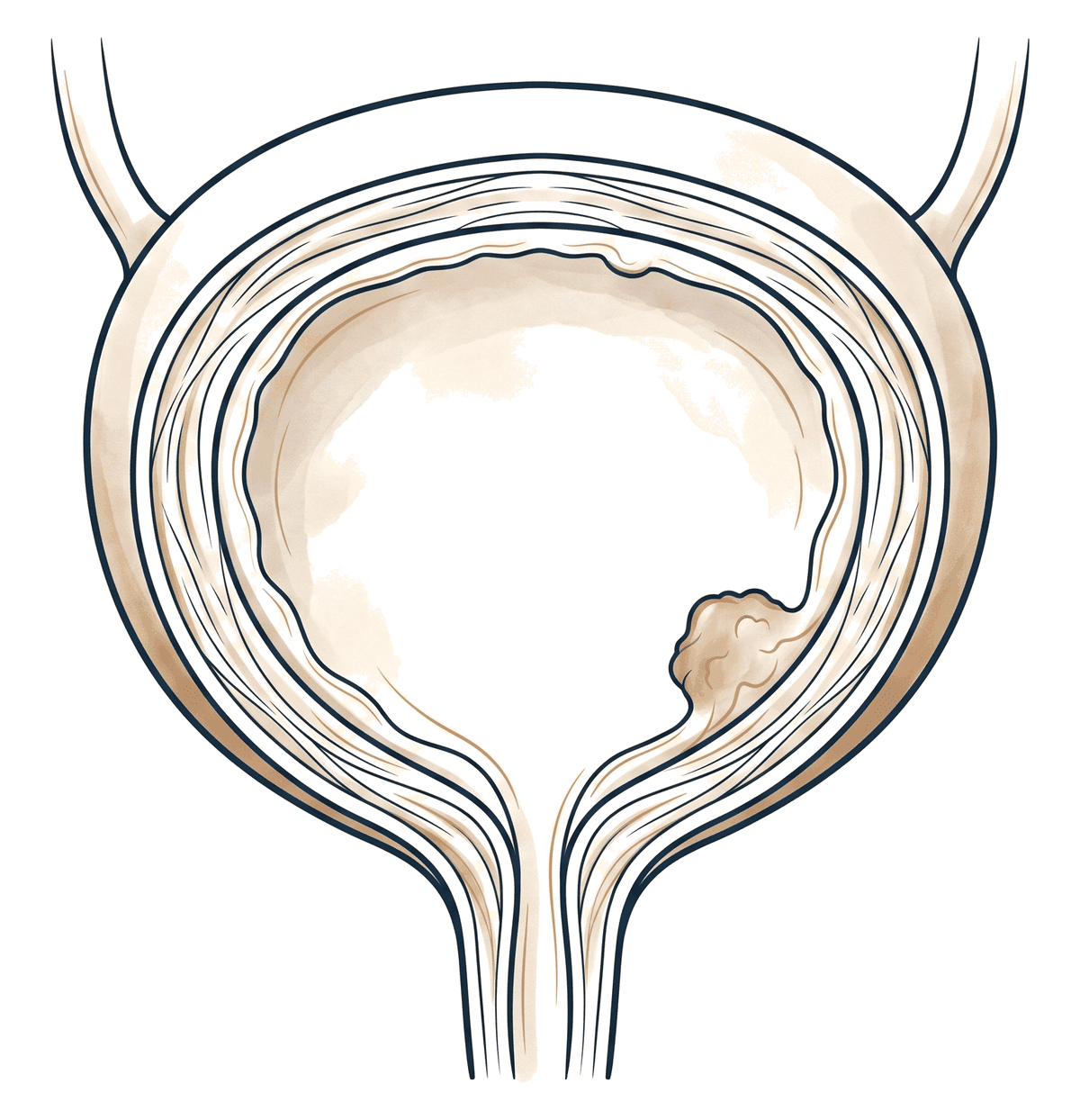
The bladder collects and stores the urine produced in the kidneys via the ureters. Cancer begins in the cells lining the inner surface of the bladder.
The most important warning sign: painless blood in the urine. It is a cancer with a high treatment success rate when noticed early, but one that requires close follow-up.
Bladder cancer develops from the cells lining the inner surface of the bladder, which stores urine. The most common type is "urothelial carcinoma," and it mostly begins superficially, on the inner surface of the bladder.
The most important feature of bladder cancer is its high tendency to recur. Superficial cancers (that have not progressed into the muscle layer) can recur even after treatment; this is why regular cystoscopic follow-up after treatment is of vital importance. Thanks to this follow-up, recurrences are caught early.
Whether the cancer has progressed into the bladder muscle layer is the most important factor determining treatment. While cancers that have not reached the muscle can be treated with the bladder preserved, muscle-invasive cancers require more comprehensive treatment.
The bladder collects and stores the urine produced in the kidneys via the ureters. Cancer begins in the cells lining the inner surface of the bladder.
The most important symptom is blood in the urine. Being painless is what makes it dangerous — because it is often not taken seriously.
Usually painless, visible blood. Even if it appears once and disappears, it must be investigated.
Increased urinary frequency by day and night; can be confused with other causes.
Burning or discomfort when urinating; it can look like an infection, but if persistent it should be investigated.
A sudden, pressing urge to urinate that cannot be postponed.
Recurrent urinary tract complaints that do not improve despite treatment should be assessed.
Flank pain, weight loss and fatigue can be seen in advanced disease.
In the case of blood in the urine, bladder cancer must always be ruled out. The basis of diagnosis is direct imaging of the bladder.
Blood in the urine is confirmed; cancer cells are investigated with urine cytology.
The inside of the bladder is examined directly with a thin camera — it is the gold standard for diagnosing bladder cancer.
The entire urinary tract, including the kidneys and ureters, is assessed with tomography.
With a minimally invasive method, the tumor is both removed (biopsy) and muscle involvement is assessed.
The most common questions about blood in the urine, recurrence and follow-up.
Yes, very important. Painless blood in the urine, even if it disappears, is the most common first sign of bladder cancer. It should not be ignored because "it passed"; it must be assessed, including with cystoscopy. Often a benign cause turns out to be the answer, but only investigation can show this.
Absolutely. Smoking is the biggest and most preventable cause of bladder cancer. Quitting reduces both the risk of new cancer and the risk of recurrence in existing disease. It is never too late to quit.
Superficial bladder cancer tends to recur even after treatment. Regular cystoscopic follow-up allows a possible recurrence to be caught early — that is, at a more easily treatable stage. This follow-up is an inseparable part of the treatment.
No, it is not necessary in most patients. In early, superficial cancers, the bladder is preserved; the disease is managed with minimally invasive surgery and intravesical treatments. Removing the bladder only comes into play in muscle-invasive or high-risk cases.
No. TUR-BT is done through the urinary tract (minimally invasive); there is no abdominal incision. The tumor is both removed and assessed pathologically to determine muscle involvement. Recovery is usually fast.
Painless blood in the urine is a warning that should not be postponed. Put your mind at ease with the right investigation. You can reach out via WhatsApp for assessment and a preliminary consultation.