A urinary tract infection (UTI) occurs when bacteria settle in any part of the urinary tract. It most often involves the bladder (cystitis) and usually resolves with a simple treatment; however, when it reaches the kidney or recurs, it needs to be assessed.
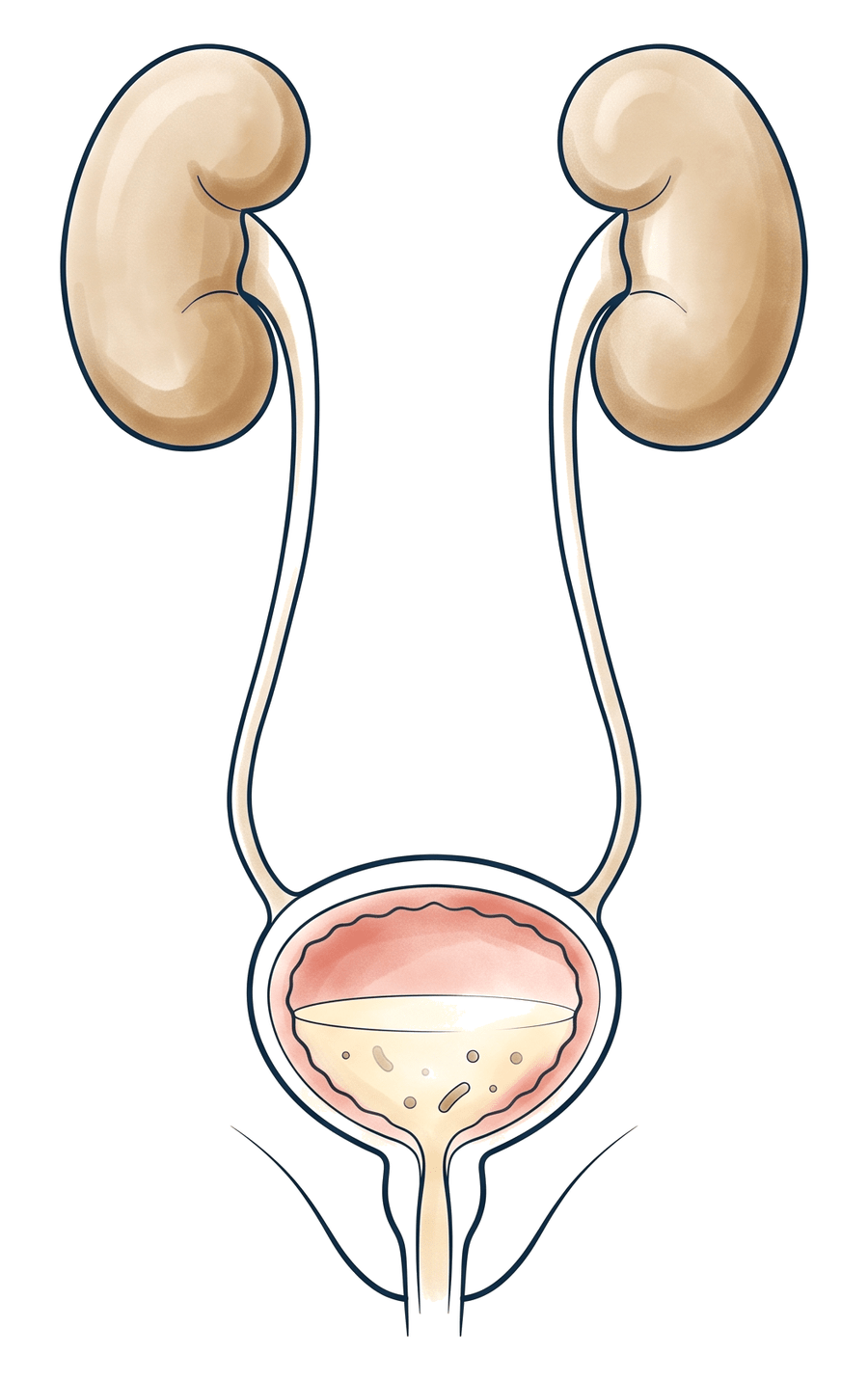
What are the symptoms?
- A burning or stinging sensation on urination
- Frequent urination in small amounts
- A sudden, non-postponable urge to urinate (urgency)
- Cloudiness, smell or sometimes blood in the urine
- Discomfort in the lower abdomen or groin region
When fever, back/flank pain, chills and nausea are added, the infection may have reached the kidney; this situation requires urgent assessment.
Why does it happen?
Most infections start when intestinal bacteria reach the urinary tract. Situations such as insufficient fluid intake, holding urine for a long time, diabetes, kidney stones, incomplete emptying due to prostate enlargement and a urinary catheter increase the risk.
How is it diagnosed?
Diagnosis is made with the complaints and a simple urine test (urinalysis). When needed, a urine culture — which shows which bacterium grows and which antibiotic it is sensitive to — is requested. In recurrent or complicated situations, imaging (ultrasound) and further assessment may be needed.
Treatment
Simple bladder infections usually resolve in a short time with an appropriate antibiotic. Drinking plenty of fluids and not stopping the treatment halfway are important. In kidney involvement, treatment can be longer and sometimes intravenous. The choice of antibiotic should be made according to the culture result and the personal situation — haphazard antibiotic use leads to the development of resistance.
Burning on urination is not always an infection; similar complaints can also come from the prostate, the bladder or other causes. The right treatment starts with the right diagnosis.
Recurrent infections
In infections that recur several times a year, an underlying cause (a stone, prostate enlargement, incomplete emptying, diabetes) should be investigated. Plenty of fluid intake, not holding urine and individual preventive measures can reduce recurrences.
When should you see a doctor?
In case of fever, flank/back pain, blood in the urine, complaints not passing within a few days or frequent recurrence, a urologist's assessment is definitely needed. UTI is far more common in women, and some have a tendency to recur; in this case a women-specific approach is needed. In men, UTI should always be assessed, because an underlying cause is often found.