📍 Istanbul Faculty of Medicine, Çapa 📞 +90 212 414 20 00 senoltonyali@istanbul.edu.tr
TR EN DE

Varicocele and Male Infertility

The most common correctable cause of male infertility: varicocele. It is often silent, but it can affect sperm production.

A varicocele is the enlargement of the veins (the pampiniform plexus) that carry blood away from the testicle — similar to varicose veins in the legs. It occurs in a significant proportion of men and is the most common correctable cause of male infertility.
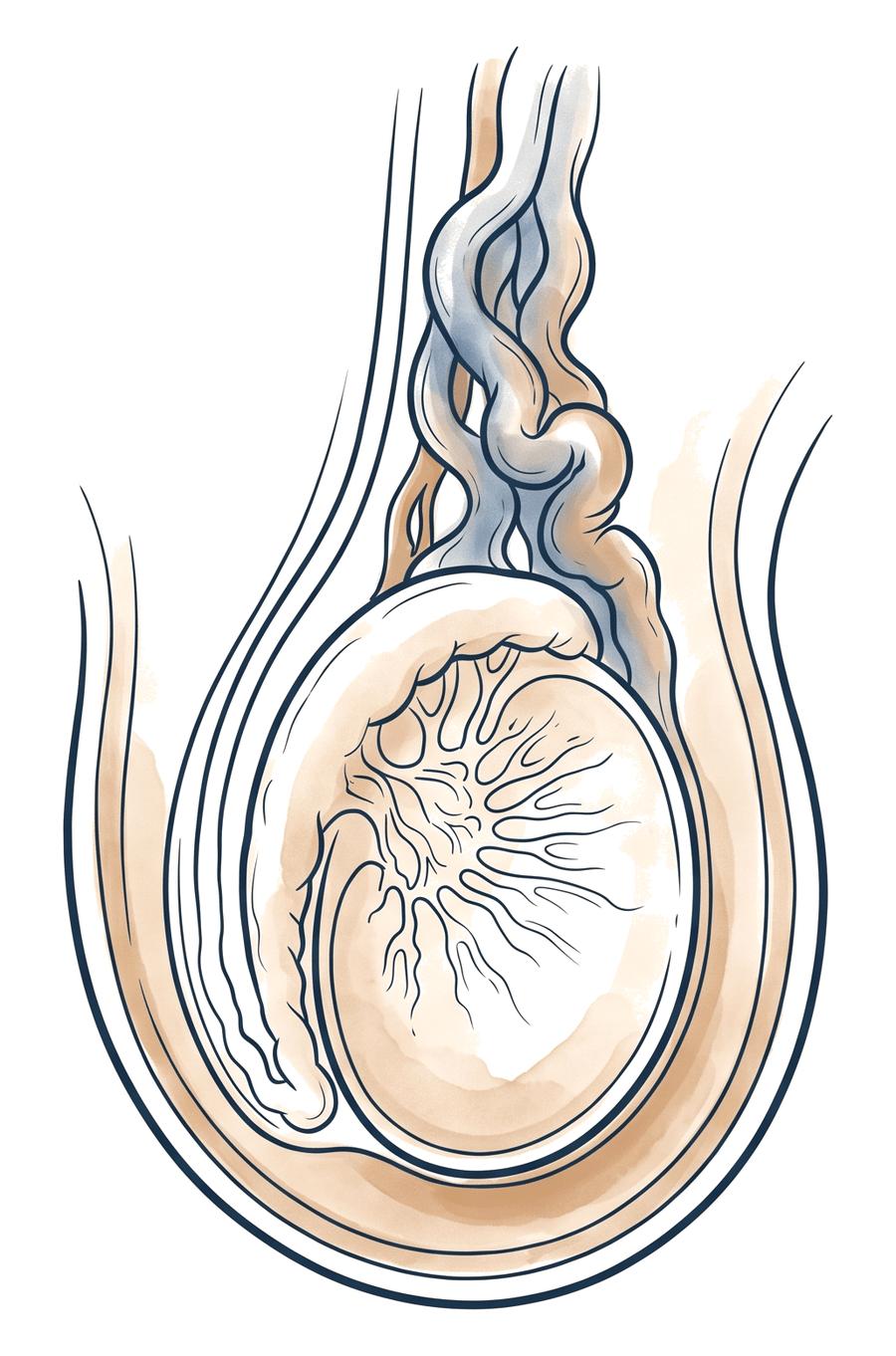
Varicocele — enlarged, tortuous testicular veins (pampiniform plexus)
A varicocele is the enlargement of the veins that carry blood away from the testicle; it most often occurs on the left side.

Relation to infertility

The enlarged veins can raise the temperature around the testicle and impair blood flow, negatively affecting sperm production and quality. However, not every man with a varicocele develops infertility; the effect varies from person to person.

What are the symptoms?

  • Often it causes no symptoms and is noticed by chance
  • Heaviness or a dull ache in the scrotum — especially at the end of the day
  • A "bag of worms"-like tangle of veins that can be felt by hand
  • In some cases, shrinkage of the testicle
  • Difficulty having children (low sperm values)

How is it diagnosed?

Diagnosis is made with a physical examination; when needed, it is confirmed with a scrotal color Doppler ultrasound. In the infertility work-up, semen analysis (spermiogram) holds an important place.

A varicocele does not always require treatment. The decision is made by assessing the sperm values, pain, testicle size and desire for children together.

Treatment: varicocelectomy

In situations that require treatment, a varicocelectomy — based on tying off the enlarged veins — is performed. In particular, varicocelectomy done with the microsurgical method is preferred for its low complication rate and good results. In suitable patients, an improvement in sperm values and an increase in the chance of pregnancy can be seen after surgery.

When does treatment come into play?

Treatment is considered in situations such as impaired sperm values together with a desire for children, bothersome pain, or affected testicular development in young people. Varicoceles that are asymptomatic and have normal sperm values are often only monitored.

This article is for informational purposes and does not replace an examination. The decision to treat a varicocele requires an individual assessment.

Related pages

Testicular Cancer and Self-Examination → Men's Sexual Health →
Frequently Asked Questions

What people wonder

The most common questions about varicocele and male infertility.

Must a varicocele always be operated on?

No. Varicoceles that are asymptomatic and have normal sperm values are usually monitored. Surgery comes into play in situations such as sperm impairment plus a desire for children, bothersome pain, or affected testicular development.

Does a varicocele definitely cause infertility?

No. Some men with a varicocele have normal sperm values and have children. The effect varies from person to person; that is why semen analysis is important.

Do sperm values improve after surgery?

In suitably selected patients, an improvement in sperm values and an increase in the chance of pregnancy can be seen after microsurgical varicocelectomy. The result depends on the person and the baseline values.

Why does a varicocele mostly occur on the left side?

Because the left testicular vein connects at an anatomically different angle, a varicocele is most common on the left; it can also occur on both sides.

Appointment

Are you struggling to have children?

A urological examination is the first step for varicocele and sperm assessment. You can reach out via WhatsApp for a preliminary consultation.