Prostatitis is a condition that arises from inflammation of the prostate gland. It is different from benign prostatic enlargement and prostate cancer and can occur at any age, especially in young to middle-aged men. Symptoms and treatment vary according to the type.
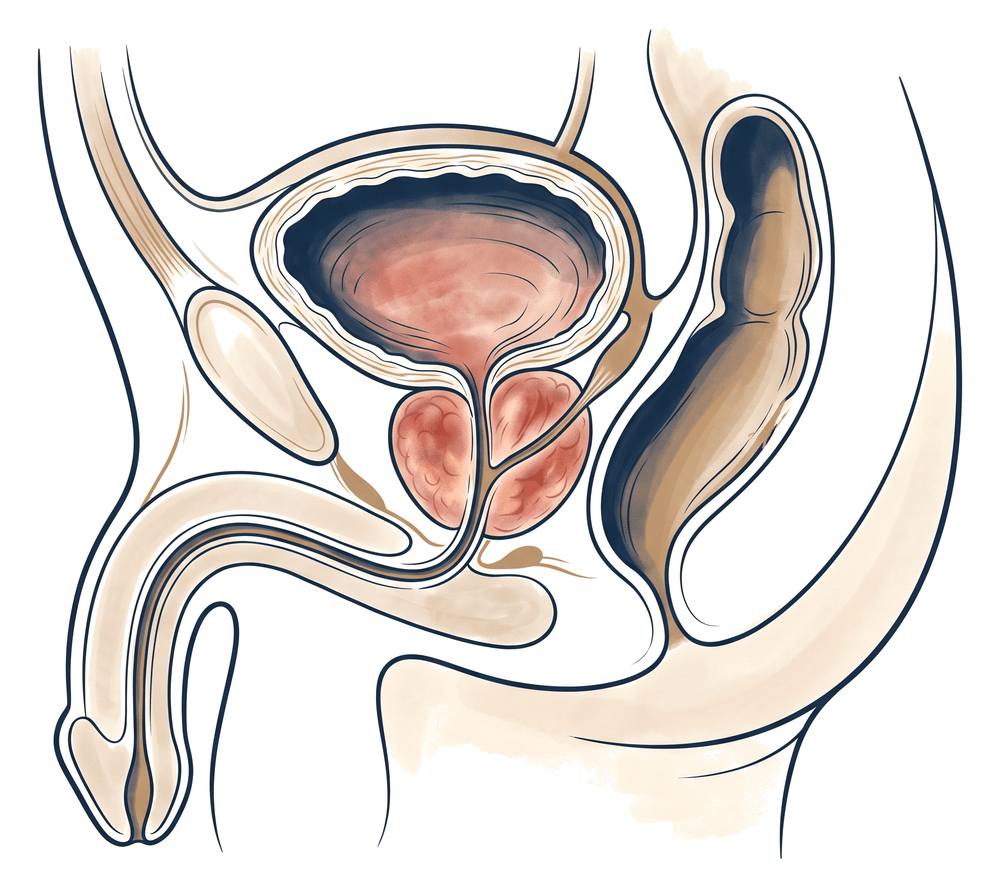
Types of prostatitis
- Acute bacterial prostatitis: Presents with sudden-onset fever, chills, difficulty voiding and pain; it requires urgent treatment.
- Chronic bacterial prostatitis: Runs with recurrent urinary tract infections and complaints that increase from time to time.
- Chronic pelvic pain syndrome: The most common type; there is long-term pain in the pelvic region and voiding complaints without an obvious infection.
- Asymptomatic prostatitis: Causes no symptoms and is usually noticed during an examination done for another reason.
What are the symptoms?
- Pain in the groin, perineum (between the anus and testicles), lower back or testicles
- Burning on urination, frequent and urgent need to urinate
- Weakening of the urine flow
- Discomfort during or after ejaculation
- Fever and weakness in the acute type
Why does it happen?
In bacterial types, bacteria in the urinary tract reach the prostate. In chronic pelvic pain syndrome, the cause is often not a single one; factors such as muscle tension, nerve sensitivity and stress play a role together.
Prostatitis is not prostate cancer and does not turn into cancer. However, because it produces similar complaints, a correct diagnosis is important.
How is it diagnosed?
Diagnosis is made with the complaints, examination and a urine test. When needed, a urine culture, PSA assessment and ultrasound are used. The aim is to distinguish prostatitis from conditions such as benign enlargement and cancer.
Treatment
In bacterial types, appropriate and usually longer-term antibiotic treatment is applied. In chronic pelvic pain syndrome, treatment is planned individually: medications targeting pain and voiding complaints, muscle-relaxing approaches, lifestyle adjustments and physical therapy can be used together. It is a process that requires patience; complaints may decrease and increase from time to time.